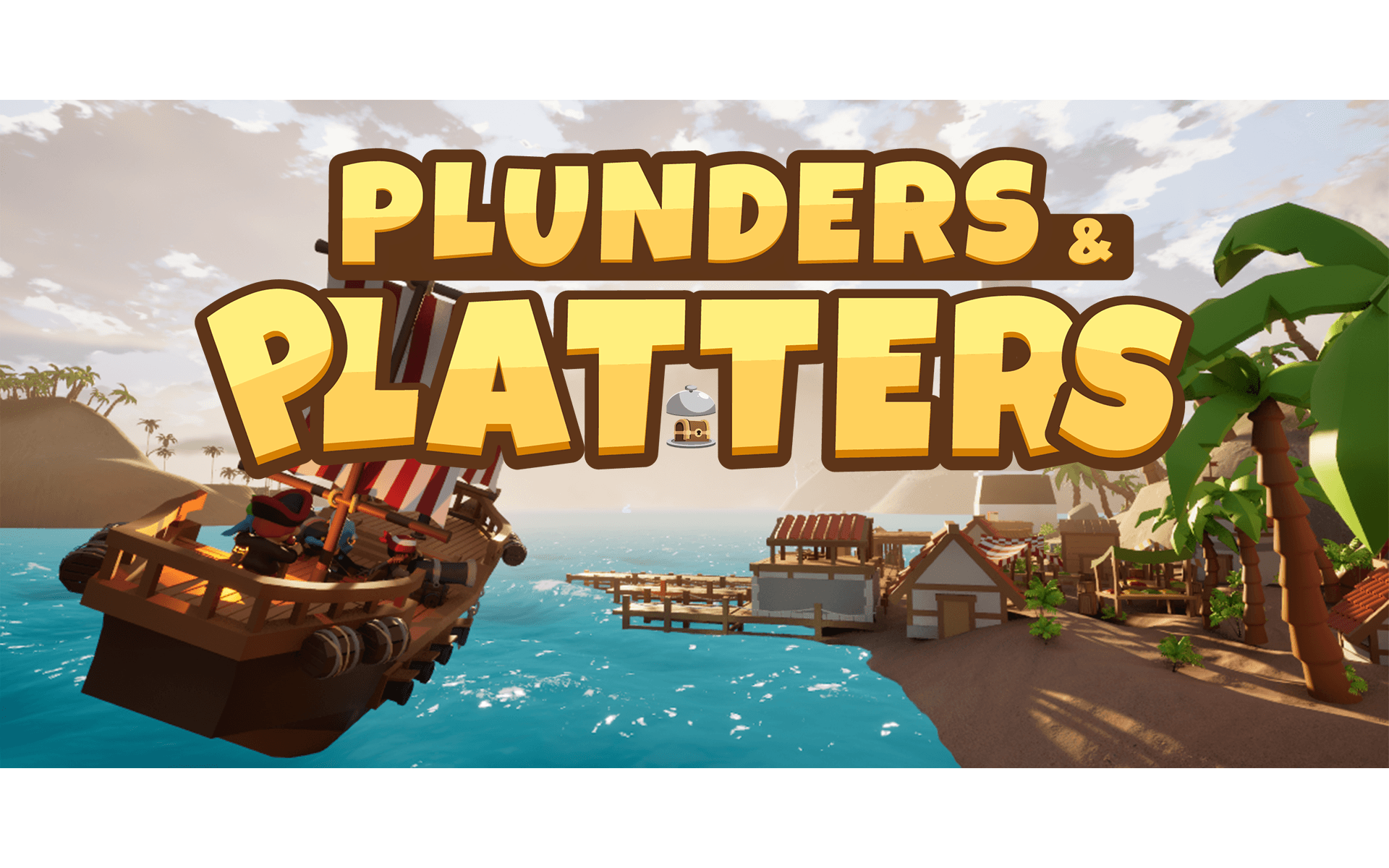
Plunders & Platters
Delivered a third-person sea-faring action game in four days, including a Kraken boss with three distinct attack modes, buoyant ship physics, and a full inventory and save system.
- Team
- Solo
- Engine
- Unreal Engine 5
- Duration
- 4 days
- Type
- Game jam
- Status
- Released
Play it
Runs in the browser. Loads on demand so the page stays light.
The problem
A boss fight is the most content-hungry thing you can attempt in a four-day jam, and a bad one is worse than none. It had to read as a real encounter without the authoring time a real encounter usually needs.
The approach
Built the Kraken around three attack modes — melee, ranged, and area-of-effect — with AI that tracks the player continuously, so the encounter generates variety from state rather than from scripted phases. Buoyancy mechanics made positioning during the fight a genuine skill rather than a formality.
What I built
- Kraken Boss Battle: Engage in a thrilling boss fight with a Kraken that I designed, featuring three attack modes—melee, ranged, and area-of-effect (AOE)—and AI that keeps its eyes locked on you at all times.
- Dynamic Combat System: Master fast-paced battles at sea, blending melee and ranged tactics against giant sea monsters.
- Buoyant Ship Mechanics: Navigate realistic ship physics as you sail through monster-infested waters, adding a layer of strategy to movement and combat.
- Inventory and Save System: Manage resources, equipment, and recipes with an inventory system, alongside saving/loading functionalities to track your progress.
- Comprehensive HUD Design: A fully integrated HUD that serves as the manager of all widgets, ensuring seamless interaction and gameplay feedback.
- High Seas Culinary Adventure: Explore the blend of cooking and combat as you defeat sea monsters and collect rare ingredients to dominate the cooking competition.
Gameplay
Screenshots
Built with
What I'd do differently
Three composable attack modes produced more perceived variety than a longer scripted sequence would have, and cost far less to build. Routing every widget through a single HUD manager kept the UI coherent under jam pressure.